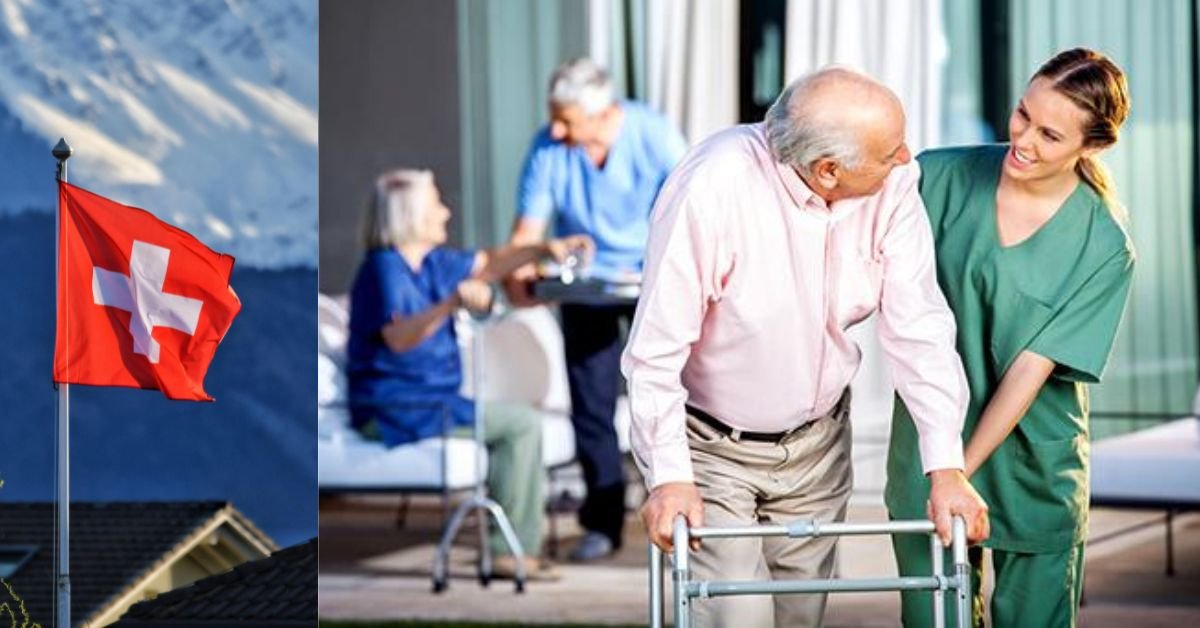
Healthcare Jobs In Switzerland With Visa Support
Switzerland- the land of good life, stunning views, and healthcare that is of global standard. To non-EU medical professionals, it is the professional peak to get employed in this lucrative market. The Swiss Healthcare Shortage Occupations require the challenge to be pursued as the pathway is rigorous.
The Non-EU Visa Hurdle- The Quota
Switzerland is not a member of the EU free movement zone, which implies that all non-EU/EFTA employees are under strict limits on the number per annum on a case-by-case basis controlled by the Federal Council. This is the only largest aspect that will affect your application.
Strict Swiss Work Permit Quotas 2026
Recently, the Swiss Federal Council has confirmed that the number of work permits in the third-country nationals on an annual basis will not be further increased but a certain amount of stability will be retained; however, the Competition in getting the permits will also be intense in healthcare Switzerland.
- B Residence Permits (Long-term): There are some 4,500 long-term, annually renewable permits of skilled workers. This is what most professionals aim at getting in order to have a stable career.
- L Short-term Permits: There are about 4,000 short-term (up to 12 months) permits, which are typically applicable in early contracts or very specialized assignments.
- These are the limited slots that your employer has to find on your behalf. The demand is the most significant in Cantons such as Zurich and Vaud and therefore early application is very important.
The Employer Mandate: Labor market Test
To ensure the success of a Swiss employer sponsorship requirements non-EU, one must prove three main requirements to the cantonal authorities:
- Superior aptitude: You should be high-qualified expert (university education or another and special experience).
- Shortage: The required skills need to be established as needed and not easily available in Switzerland or in the EU/EFTA in general (Priority of Swiss/EU/EFTA workers). This is where the healthcare sector has done well.
- Salary Parity: The salary provided should be equal to the current market rate and high enough to make it worth hiring a non-EU specialist ( Swiss salary compliance of foreign workers ).
Mandatory Professional Recognition (E-A-T Compliance)
You have to be recognized in your area of professionalism before a Swiss hospital or clinic can even consider making a visa application. Medical jobs in Switzerland visa sponsorship cannot do away with this.
The MEBEKO Foreign NOTE Recognition Process
In the majority of medical careers, the qualified body is MEBEKO (Medical Professions Commission).
- Controlled Occupations: The physicians, nurses, pharmacists and dentists are expected to be obliged to be recognized to practice.
- The Process: The process typically starts with an online eligibility test, the so-called PreCheck. After full payment of fee based application:
- Schedule: The recognition process will be a maximum of four months to make the first decision. In case significant discrepancies are discovered between your training in the foreign country and the Swiss benchmark, some compensatory actions (aptitude tests or training courses) might be needed, which would prolong the time frame tremendously.
Application of Language Proficiency Swiss Work Permit
Switzerland has four official languages (German, French, Italian and Romansh). Patient safety and integration will require your professional language skills.
- Requirement: B2 language of the working Canton is generally the minimum requirement to be recognized and given a work permit. In the case of doctors, and particularly those dealing with patients, the level required by the institution is usually a C1 level.
- German-Speaking: Zurich, Bern, Basel (Most number of jobs).
- French-Poaching: Geneva, Vaud, Valais.
- Italian-Speaking: Ticino.
Available Positions and Remuneration Information
The largest driver to Non-EU healthcare work permit Switzerland 2026 is still the Nursing shortage Switzerland 2026 as well as the demand of specialists.
Swiss Healthcare Shortage Occupations
The available use of B residence permits of non-EU specialists is the most viable in the following positions:
- Nursing: Intensive care nurse vacancies Switzerland, specialized surgical nurse and very experienced Registered Nurses.
- Salary Insight: The gross annual average salary of a Registered Nurse Switzerland non-EU is about CHF 90 571 with an entry-level position at CHF 64 043 and senior position at more than CHF 111 823 (2025 data).
- Physicians: The most specialized fields are the most needed.
- Among the Specialities of medicine that are in demand in Switzerland; there is visa sponsorship in Geriatrics, Anaesthesiology, Radiology and General Practitioners (where it is necessary in rural areas).
- Allied Health: Highly specialized Physiotherapist jobs Switzerland non-EU and more technical positions (Radiology/Lab technician jobs Switzerland) are also competitive targets.
FAQs
Is it possible to apply to work before MEBEKO international diploma recognition?
Yes, but conditional. Most hospitals will interview and give you a job on condition that you will gain recognition (or at minimum have started the process) and get the Long-term residence permit Switzerland (B Permit). It is strongly advised to start the MEBEKO PreCheck before taking application.
What impact will Swiss work permit quotas 2026 have on my application?
The quotas are issued either in yearly (B permits) or quarterly (L permits). In case one canton exhausts its assigned quota slots, then your application will either be stalled or put on hold until the eligibility period. This implies that it is important to ensure that applications are filed early in the year (Q1) in order to achieve a non-delays.
How much does it cost to hire a non-EU healthcare worker with the minimum salary?
Switzerland has no minimum wage published, but uses a test, the prevailing wage test. The salary should be in the normal scale of that job and area. On a Non-EU healthcare work permit salary 2026, it typically implies that an offer will need to be considerably higher than the local average, typically CHF 80,000+/year to support a visa.
Will I be able to bring my family with me in case I am issued with a B Permit?
Yes. Once you manage to obtain the status of B Permit successfully, you can usually obtain the status of Family reunification Swiss work visa in respect of your spouse and minor children. Your permits will be bound up with theirs.
Is the employment of a General Practitioner in a rural region easier?
Yes. General Practitioners rural Switzerland has been documented to be short of. Less densely populated and less preferred cantons tend to have lesser applicants which would facilitate the Labor market test Switzerland Foreign doctor jobs Switzerland.
Final Thought
The competition is intense in the context of the Healthcare Jobs in Switzerland With Visa Support because non-EU quota system is applied; however, the long-term demand of the Swiss Healthcare Shortage Occupations will provide the competent workers with a clear way to go. The key to success is preparation: you need to master the language, acquire your MEBEKO Recognition and target your applications with specific and high-demand skills. Switzerland is waiting not only with professional experience of equal opportunities but also with an unparalleled quality of life.
Disclaimer
This job content is shared for educational and informational purposes only. The content regarding Healthcare Jobs in Switzerland With Visa Support, including the Nation work permit quotas 2026 and MEBEKO recognition procedures, is based on current and expected regulations from the Swiss Federal Group meeting and Cantonal authorities. Please confirm all details, salary compliance, and proceeding steps from the official employer or government internet site (e.g., SEM, MEBEKO, or Cantonal Migration Offices) in front applying or making major decisions.