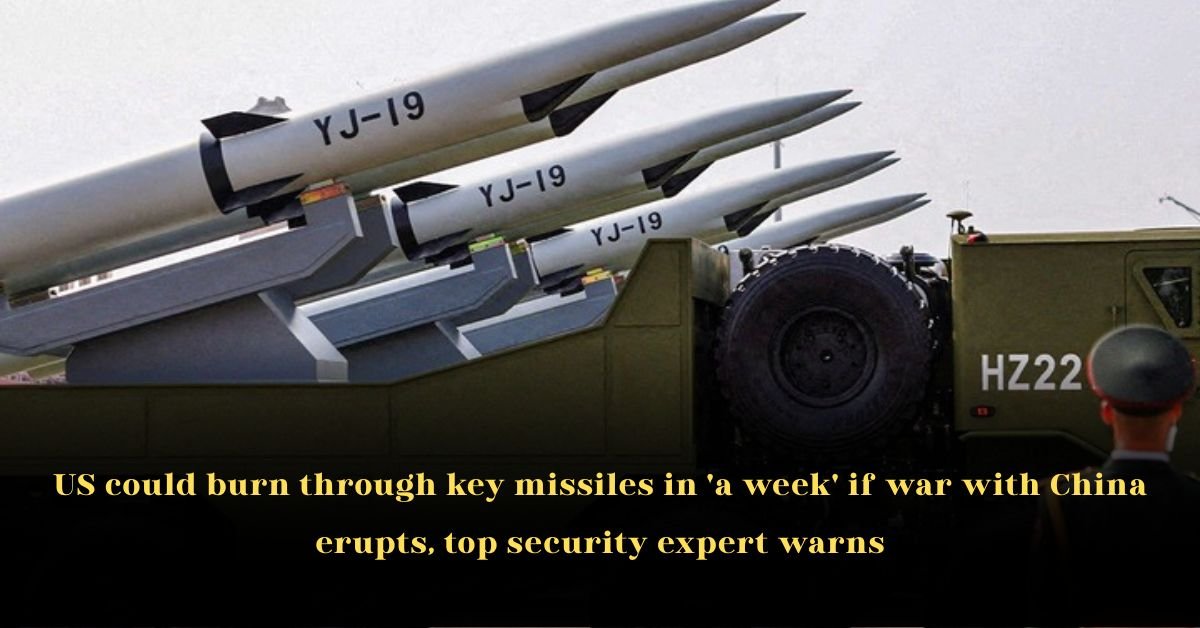
A top U.S. defense expert, Seth Jones from the Center for Strategic and International Studies (CSIS), warns that the United States could run out of important long-range missiles in about one week if a war with China starts. He says China is growing its military factories very quickly, much faster than the U.S., and this could give China a big advantage in a long war.
China’s Industrial Might: Outpacing U.S. Output
Jones explains that China produces far more military equipment than the United States.
While the U.S. focused on making small numbers of high-tech weapons after the Cold War, China focused on building large amounts of weapons and equipment, like a country preparing for wartime. China is investing heavily and producing a lot in many military areas:
- Naval Shipbuilding: China’s navy became larger than the U.S. Navy around 2014. By 2030, it may have almost 50% more ships. The U.S. still has bigger ships and more experience, but China is growing fast.
- Missile Systems: China now has the largest collection of ground-based missiles in the world. Its DF-26 missile can reach up to 4,000 kilometers, which means it can hit U.S. bases such as Guam.
- Aircraft Production: The U.S. still produces more advanced aircraft, but China’s overall industry is much larger. For example, in 2018, China produced 928 million tons of steel, while the U.S. made only 86.7 million tons.
Because China produces so much, it could handle a long and heavy war better than the U.S. with today’s limited production capacity.
ALSO READ : Nuggets’ Jamal Murray Earns NBA Honor After Recent Hot Streak
The U.S. Missile Shortage and Production Lag
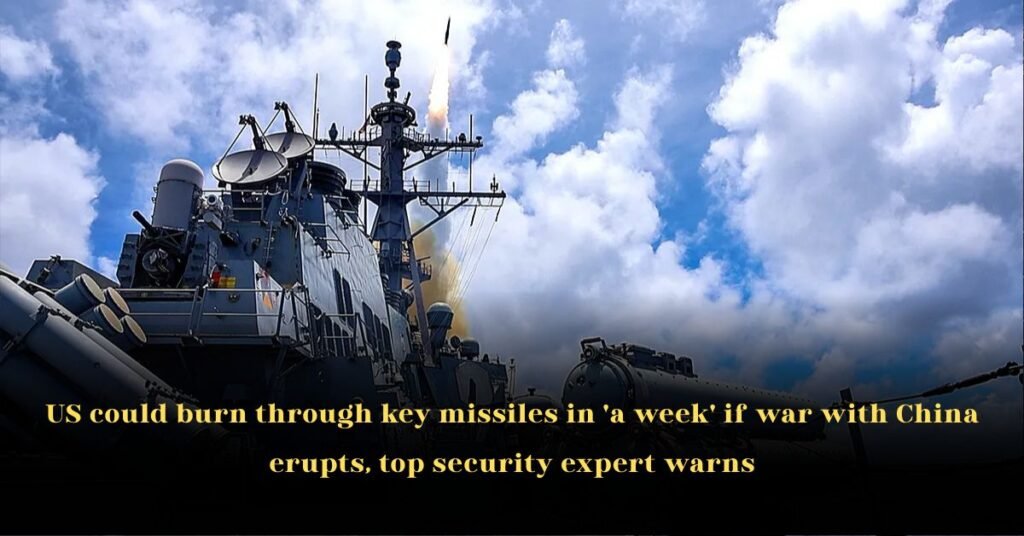
The warning about “one week” refers to important long-range missiles like PrSM, JASSM, and LRASM.
CSIS war games show that the U.S. might use more than 5,000 missiles in just three weeks during a fight over Taiwan. This is far more than the U.S. currently has in storage. The main problem is that the U.S. defense industry cannot quickly increase production. Since the Cold War ended, the industry became smaller and focused on saving money instead of preparing for large-scale war. Current challenges include:
- Slow Procurement: The Pentagon takes a long time to order weapons. Contractors do not get steady orders, so they don’t invest in bigger factories.
- Supply Chain Problems: The U.S. depends on foreign suppliers, including China, for important parts and minerals. One report found that Chinese companies make up about 10% of key suppliers for U.S. defense systems.
- Production Goals: The Pentagon is asking companies to make many more missiles. For example, they want to produce 2,000 Patriot missiles a year, which is about four times more than today’s level.
Strategic Advantages and Urgent Call to Action
Jones says the U.S. still has strong advantages in some areas—especially under the ocean. China is behind in submarine detection, undersea surveillance, and anti-submarine warfare. This is an important strength for the U.S. in the Pacific region. However, the main message is that the U.S. must move faster to fix its industrial problems. Experts say the U.S. should:
- Accelerate Procurement: Speed up the Pentagon’s buying process and create long-term contracts so companies can safely increase production.
- Expand Manufacturing: Build more U.S. factories and secure important minerals to reduce dependence on foreign sources.
- Integrate Technology: Quickly use new technologies like artificial intelligence and advanced drones in military systems.
Experts believe the defense industry must be treated like a top national priority. The U.S. needs to act more like it is preparing for a possible wartime situation to stay ready and strong in the Indo-Pacific region.
Disclaimer
The news information presented here is based on available reports and reliable sources, including analysis from the Center for Strategic and International Studies (CSIS). Readers should cross-check updates from official news outlets and government reports.